August 17, 2026 · 7 min
LTL freight shipping from your side of the dock: the life of one shipment
Eight thousand one hundred searches a month at a competition index of 0.05. The network side of the story has been told; this is the shipper side, stage by stage.
The network’s side of LTL freight shipping is the cross-dock: terminals, linehauls, and three to six forklift handlings between your dock and the consignee’s. That story is in what LTL actually is. This article is the other side: what the shipper does at each stage, because most of what goes wrong in LTL goes wrong before the truck arrives.
Before anything moves: describe, measure, weigh
Three facts have to be right before a booking is worth making. What the commodity is, in plain words, because classification is a published tariff by commodity and the description is what lets it be looked up. What the shipping unit measures, to the highest point and the widest overhang, pallet included, because the outside dimensions are a rate input. And what it weighs on a scale, not in a catalogue. Everything downstream, the quote, the invoice, a claim, rests on these three.
Build the pallet as if nobody will be there to explain it
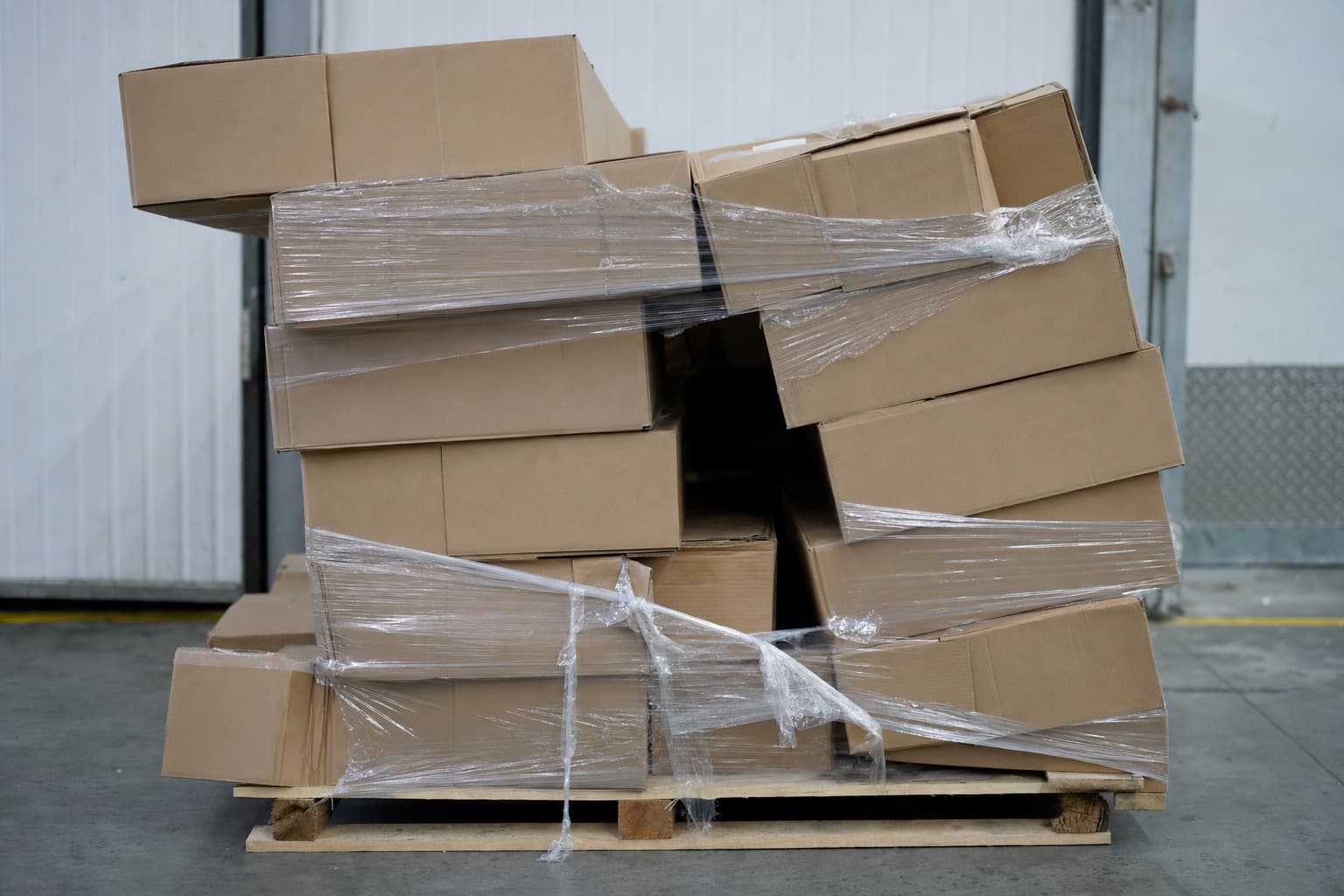
Your freight will be handled by people who have never seen it before and will spend seconds deciding how to move it. Cartons stacked in columns, nothing overhanging, wrap anchored to the pallet itself, labels on the sides where a forklift driver can read them. A pallet that can be stacked travels better and cheaper than one that cannot, and a pallet that looks fragile gets treated as an obstacle. The construction detail is in how a shipping pallet has to be built, and what we ask for is on the pallet shipping page.
The bill of lading is the shipment
As far as the carrier is concerned, the bill of lading is not paperwork about the freight, it is the freight. It states what is being carried, how much of it, who pays, and what services are expected at each end. A vague description invites the carrier to classify for you. A missing accessorial becomes a charge discovered later. Write it as if the person reading it knows nothing about your business, because the person reading it knows nothing about your business.
Pickup day
Have the freight ready before the window opens, not during it. A driver on an LTL route has a schedule built from other people’s pickups, and a pallet still being wrapped when the truck arrives becomes a missed pickup, which is rebooked, not apologised for. Count the pieces onto the truck, keep a signed copy, and photograph the pallet as it leaves. The photograph takes seconds and it is the only evidence you will ever have of the condition the freight left in.
While it moves
An LTL transit time is an estimate, not a commitment, unless a guaranteed service was purchased. Tracking shows terminal events rather than a dot on a map, and a quiet day in the middle of a linehaul is normal. What deserves a reaction is a shipment that stops progressing: a pallet sitting at the same terminal across several updates needs a phone call, and making that call is our job rather than yours.
Delivery is a job, not an event
The receiver has one moment of real leverage, and it is the delivery receipt. Count the pieces. Look at the wrap. If anything is short or damaged, write it on the receipt before signing, specifically. A clean signature on a damaged delivery is the most expensive signature in freight, because a claim filed against a clean receipt starts from behind.
After the truck leaves
Check the invoice against the quote, line by line. If they differ, the causes are almost always the ones in the re-rating article, and the measurements and photographs from pickup day are what resolves them. If there was damage, claims have deadlines and are won with evidence, not with frustration. None of this is difficult. All of it is discipline, and it is the difference between shippers who find LTL cheap and reliable and shippers who find it chaotic.
Where we fit in this
We book the carrier, watch the tracking, chase the exceptions and handle the disputes. What we cannot do is measure your pallet from here, which is why the questions we ask before quoting are the ones this article started with. Answer those three well and the rest of the machine mostly behaves.
Start the shipment with the three facts that decide it
Commodity, measurements, scale weight. We take it from there.
LTL Freight Match is a licensed freight broker. It quotes, books and manages less-than-truckload shipments, arranges the carrier, and handles the classification, the accessorials and the claim if one is needed.