LTL delivery service: what you are actually buying
LTL means your freight shares a trailer with other people's freight. Everything that surprises shippers about it, the transit times, the rehandling, the way the price is built, follows from that one fact.
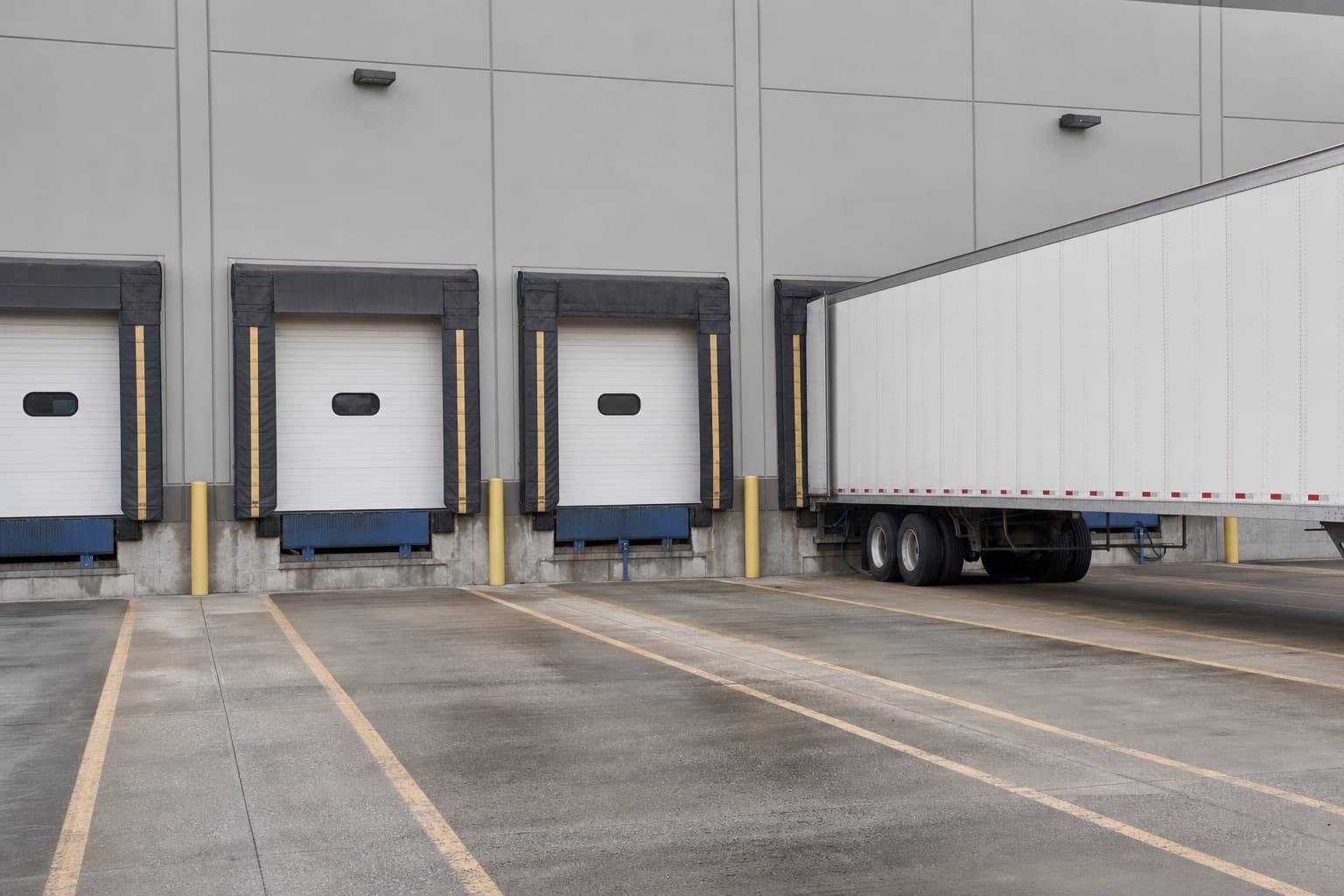
What less-than-truckload actually is
A full truckload is simple to picture: your freight is loaded, the doors close, and the trailer goes where you are sending it. Less-than-truckload is the opposite arrangement. You are buying a portion of a trailer, and the rest of that trailer belongs to shippers you will never meet. The carrier's job is to fill it, and the network exists to make that filling efficient.
That is why LTL is cheaper than a dedicated truck for a few pallets, and it is also why an LTL shipment behaves differently from a parcel or a truckload. Your pallets do not travel in a straight line. They travel through a network.
Understanding that network is not an academic exercise. Almost every question a shipper asks, why did the transit take that long, why was there a reweigh, why did the invoice change, why was that box crushed, has its answer somewhere in the path the freight took.
The path a pallet takes
A typical LTL shipment goes through five distinct phases, and each one is a place where something can be measured, charged or damaged.
- Pickup. A local truck collects your freight along a route with other stops. This is why pickup windows are windows and not appointments, unless one has been arranged.
- Origin terminal. Your pallets come off the local truck, are weighed or dimensioned, are checked against the bill of lading, and are staged for the outbound lane. This is where a reclass or a reweigh happens.
- Linehaul. The long move between terminals. This is the part that looks like distance on a map, and it is usually the part with the fewest surprises.
- Destination terminal. Freight is broken down again and loaded onto a delivery route. On a longer lane there may be an intermediate terminal, and the freight is handled there too.
- Delivery. A local truck brings it to the consignee. Whether the driver can actually unload it is decided by what was declared at booking, not by what is found at the curb.
Each terminal is a handling event. Freight is lifted, set down, restacked and sometimes loaded on top of. That is the single strongest argument for building a pallet properly, see pallet freight shipping , and it is why LTL damage rates behave nothing like parcel damage rates.
Why transit times are estimates and not schedules
Standard LTL transit is quoted in business days between terminals, and it is a service standard rather than a guarantee. A carrier publishing a two-day standard on a lane is telling you what its network normally achieves, not what it is contractually committing to.
If the date genuinely matters, an install crew is booked, a trade show floor closes, a production line stops, then a standard transit is the wrong product. That is what guaranteed and expedited service levels exist for, and they are priced accordingly.
The most common cause of a missed transit is not the linehaul. It is the delivery end: an appointment that could not be scheduled, a consignee closed on the day the freight arrived, a receiver who refused it because nobody was expecting it. Those are avoidable, and they are avoided at booking rather than in transit, as commercial LTL shipping sets out for docks and appointments.
What an LTL carrier is responsible for
Carrier liability for LTL is not the same thing as insurance. It is a limited liability set out in the carrier's tariff, usually expressed per pound and often varying by the freight class and the commodity. A pallet of used equipment and a pallet of new equipment of identical weight can carry very different maximum liability.
For high-value freight, that limit is frequently well below the replacement cost. Shippers who care about the difference buy separate cargo coverage rather than assuming the carrier's liability will cover it.
When LTL is the wrong choice
LTL is not always the answer, and a provider worth dealing with will say so. Three situations regularly point elsewhere.
- Very small shipments. A single light box often moves cheaper and faster as parcel, and it is not exposed to terminal handling at all.
- Large or heavy shipments. Past a certain number of pallets or a certain weight, a dedicated truck can cost less than the LTL rate and removes every rehandling event at once. The crossover point moves with the lane and the market, and partial truckload sits in between.
- Fragile, unpackaged or awkward freight. Anything that cannot survive being stacked on, forked from one side and moved four times is a poor fit for a shared trailer, whatever the rate says. Freight that has to stay cold runs on a separate, smaller network, described in refrigerated LTL freight.
None of that is a reason to avoid LTL. It is a reason to describe the shipment accurately and let providers tell you whether their network is the right one for it.
Frequently asked questions
How many pallets is too many for LTL?
There is no fixed number. Most shippers start comparing against a dedicated truck somewhere in the range where the trailer space and weight begin to look like a partial truckload rather than a few pallets. It depends on the lane and the week, which is why it is worth asking rather than assuming.
Will my freight be on the same truck the whole way?
Almost never. Rehandling at terminals is the defining feature of LTL. If your freight cannot tolerate it, the packaging has to change or the mode has to change.
Can I track an LTL shipment?
Carriers provide a PRO number and status updates at network events, picked up, arrived at terminal, out for delivery. It is event tracking, not continuous GPS, and the level of detail varies by carrier. How to read those events is in how LTL freight tracking works.
Related pages
- Bill of ladingRaise a bill of lading that will not cost money at the dock.
- Platforms comparedWork out which kind of platform answers your question before comparing features.
- Freight class calculatorKnow your density, and the class it points to, before the dock measures it.
- Shipment descriptionStop comparing three quotes that describe three different shipments.
- LTL delivery serviceUnderstand the service model before comparing providers.
- Freight class and dimensionsDeclare freight correctly and avoid reclassification charges.
Describe the shipment, not just the lane
Two ZIP codes, a weight and a plain description of what is on the pallet are enough to reach providers whose network actually fits the move.
LTL Freight Match is an independent reference on less-than-truckload shipping for the people who buy it. It moves no freight, holds no brokerage authority and books nothing. It explains what decides a class, which accessorials turn a quote into a different invoice, and how to put competing quotes on the same footing.