Residential freight: what counts as residential is broader than you think
Carriers classify a location by whether a tractor-trailer can serve it like a business, not by what the sign on the door says. A great many addresses that feel commercial are residential by that test.
What carriers actually mean by residential
The definition is operational. A residential location is one where the delivery cannot be performed the way a commercial delivery is performed: no dock, no forklift, restricted access for a large vehicle, and often no reliable presence during business hours.
That definition catches locations most shippers would not describe as residential:
- A business operating from a home, including one with a company name and a VAT-style registration.
- Farms, ranches and agricultural buildings.
- Self-storage facilities.
- Schools, churches, community halls and clubs.
- Construction sites and undeveloped land.
- Small retail units on a street with no rear access.
- Military bases, prisons and other controlled-access sites, which carry their own limited-access treatment.
Some of these are billed as residential, others under a separate limited-access accessorial. Which one applies is the carrier's determination.
Residential and liftgate are two different charges
This trips up nearly everyone. The residential charge reflects the cost of serving an address that is not set up for freight. The liftgate charge reflects the equipment needed to get the pallet off the truck. A residential delivery almost always needs both, and they are billed as two lines because they are two things.
Booking one and not the other produces the same failed delivery as booking neither.
What happens on the day
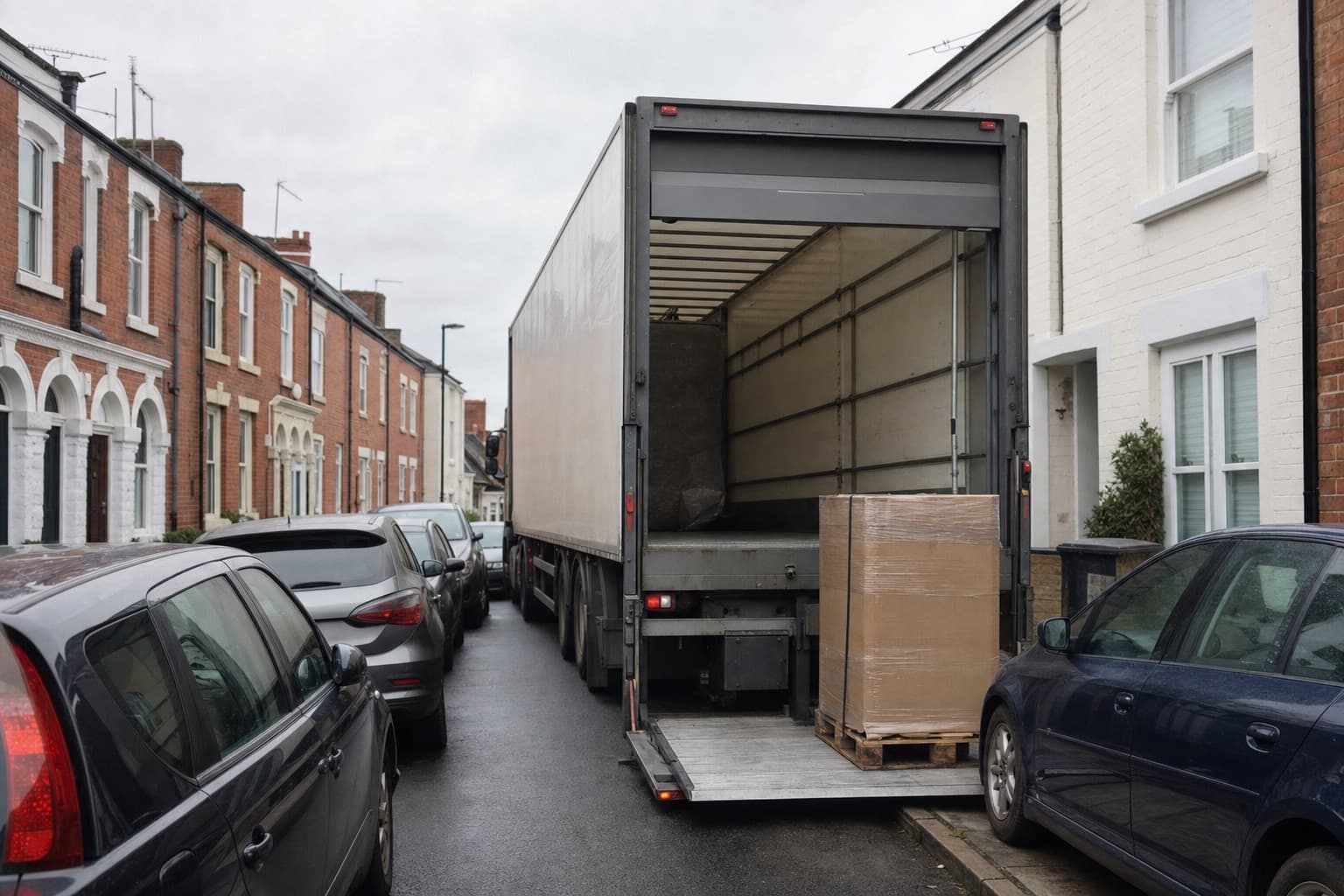
A residential delivery is a curbside delivery. The truck stops in the street, the liftgate lowers the pallet, and the pallet is left at the kerb or the end of the driveway. Someone has to be there to sign for it.
From there it is the receiver's freight to move. A loaded pallet weighing several hundred pounds does not go up a gravel drive on a hand truck, and a pallet jack does not work on grass or loose stone. Planning for that in advance is the difference between a delivery and a pallet sitting in the rain.
- Arrange help before the delivery date, not on it.
- Have a hard, flat surface within reach of where the truck can stop.
- Consider unloading the pallet in place, box by box, rather than trying to move it whole.
- Check the street: low branches, narrow turns, weight-restricted bridges and gated communities are all reasons a trailer cannot reach an address, and all are worth flagging at booking.
How to avoid the residential charge honestly
There is one dishonest way, declaring a residence as a business, and it does not work. Carriers correct the classification on the invoice, and the correction usually costs more than the original charge would have.
The honest alternatives are real and often better:
- Terminal pickup. Have the freight held at the destination terminal and collect it. This removes both the residential and the liftgate charge, and the forklift there is free.
- Deliver to a commercial address you have access to, a workplace, a supplier, a storage business with a dock, and handle the last mile yourself.
- Ship to a business receiving service that accepts freight on your behalf, where one exists nearby.
Each involves you moving the freight the last few miles. For heavy or awkward items, that is frequently the easier half of the problem.
Frequently asked questions
My business is registered at my home. Is that commercial?
Generally not, for freight purposes. The test is whether the location can be served like a commercial site, and a house with a driveway cannot, regardless of what is registered there.
Can the driver leave the pallet if I am not home?
No. Freight requires a signature. An unattended delivery attempt becomes a failed delivery and a redelivery charge.
Is terminal pickup difficult?
It is straightforward if you have a suitable vehicle and can get there during opening hours. The terminal has a forklift and will load you. Bring the PRO number and photo identification.
Say what kind of place it really is
Home, farm, storage unit, site with limited access, the form asks in plain language, and a correct answer keeps the quote intact.
LTL Freight Match is an independent reference on less-than-truckload shipping for the people who buy it. It moves no freight, holds no brokerage authority and books nothing. It explains what decides a class, which accessorials turn a quote into a different invoice, and how to put competing quotes on the same footing.