Freight class and dimensions: where reclasses come from
Freight class is not a category somebody assigns to your industry. It is a consequence of geometry, handling risk and value, and on freight classed by density, which the 2025 NMFC changes made more common, geometry does most of the work.
What freight class is
The National Motor Freight Classification, published by the NMFTA, sorts commodities into classes used across the LTL industry. Classes run from the lowest, applied to dense and durable freight, to the highest, applied to light, bulky, fragile or high-value freight. Lower class generally means a lower rate for the same weight.
Classification looks at four characteristics: density, stowability, ease of handling and liability. Density is how much the freight weighs for the space it occupies. Stowability is whether it can share a trailer with other freight. Handling covers whether it needs special equipment or care. Liability covers value, fragility, perishability and the risk it poses to freight around it.
Many commodities are classified by density, meaning the class moves with how tightly the shipment is packed. Others carry a fixed class regardless of density. The distinction is written into the NMFC item for that commodity, which is why the item number is worth having when it is available. Since the 2025 changes, density plays a larger role in classification than it used to, which makes accurate measurement worth more.
Density, in plain arithmetic
Density is pounds per cubic foot. Multiply length by width by height in inches, divide by 1,728 to get cubic feet, then divide the weight by that figure.
A worked example, using round numbers rather than a real shipment: a unit measuring 48 by 40 by 48 inches occupies 92,160 cubic inches, which is 53.3 cubic feet. At 800 pounds, that is a density of about 15 pounds per cubic foot. At 300 pounds, the same footprint gives about 5.6, a different density band, and on a density-based commodity, a different class and a different rate.
Nothing about the freight changed except how much of it there was. That is the mechanism people find counter-intuitive, and it is the reason a half-full pallet is often worse value than a full one.
Where reclasses come from
A reclass is a carrier correcting the class after inspection. The correction is applied to the invoice, and it usually carries an inspection charge as well. Four causes account for most of them.
- The pallet was measured before it was wrapped. Wrap and overhang add inches, and inches change cubic feet.
- The weight was estimated low, or the pallet and dunnage were not counted.
- The commodity description was too vague to classify, so the carrier applied its own reading.
- The class was copied from a previous shipment that was not actually the same freight.
All four are avoidable with a tape measure, a scale and a sentence of honest description. None of them are avoidable by guessing a lower class and hoping.
How to measure a handling unit properly
- Build and wrap the unit completely, exactly as it will be tendered.
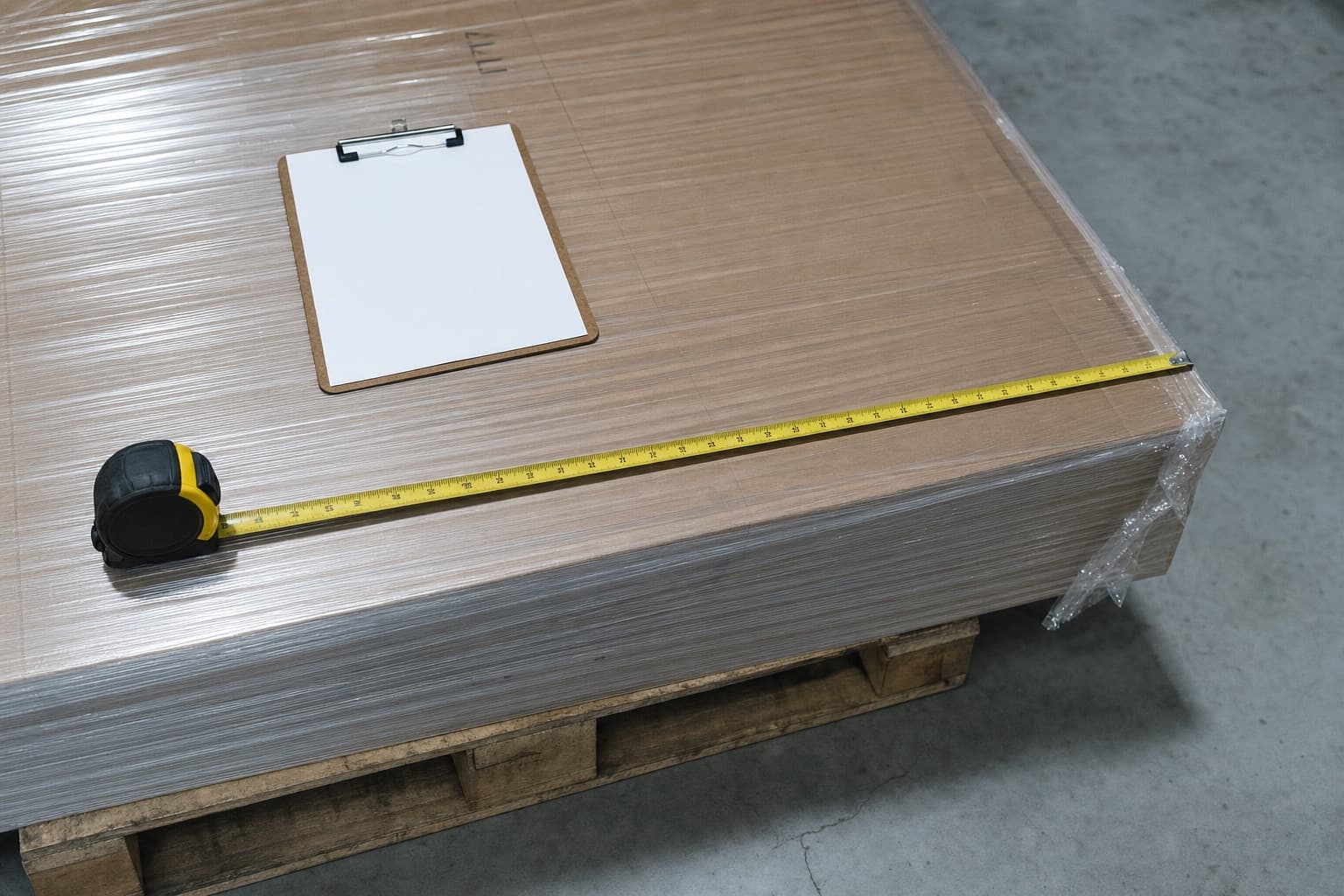
- Measure length and width at the widest point, including anything that overhangs the pallet deck.
- Measure height from the floor to the top of the load, including the pallet.
- Round every measurement up to the next whole inch.
- Weigh the finished unit if you can. If you cannot, add the pallet weight and the packaging weight to the product weight rather than leaving them out.
- Record each unit separately when they differ. Averaging across mismatched units is a reliable way to be wrong on all of them.
Building the unit so those measurements stay true is the subject of pallet freight shipping.
If you do not know the class
Say so. It is the normal situation for anyone who does not ship weekly, and it costs nothing. A provider with accurate dimensions, an accurate weight and a clear commodity description can determine the class far more reliably than a shipper guessing at one.
What does cost something is asserting a class you are not sure of. The quote is then built on that assertion, and the correction arrives on the invoice.
Frequently asked questions
Can I choose a lower class to save money?
No. Class follows the commodity and, for density-based items, the actual density. A class that does not match the freight gets corrected at the terminal, with the inspection fee added.
What is an NMFC item number?
It identifies the specific commodity entry in the classification, which in turn sets how the class is determined. If a supplier or a previous BOL gives you one for the same product, it is worth carrying forward.
Does the pallet count toward the weight?
Yes. The carrier weighs what it lifts. A standard wooden pallet is not a rounding error when the freight itself is light.
Two identical products, different classes, how?
Usually different packing. Same product, looser packing, lower density, different band on a density-based item. It is the arithmetic, not an inconsistency.
Related pages
- Bill of ladingRaise a bill of lading that will not cost money at the dock.
- Freight class calculatorKnow your density, and the class it points to, before the dock measures it.
- NMFC code lookupFind the NMFC item without paying for it or trusting a stale chart.
- Shipment descriptionStop comparing three quotes that describe three different shipments.
- LTL freight quoteGet a quote that survives the invoice.
- Pallet freight shippingPrepare pallets so they survive rehandling.
Send the measurements, not the guess
Wrapped dimensions, real weight, plain description. That is enough for a provider to class it correctly the first time.
LTL Freight Match is an independent reference on less-than-truckload shipping for the people who buy it. It moves no freight, holds no brokerage authority and books nothing. It explains what decides a class, which accessorials turn a quote into a different invoice, and how to put competing quotes on the same footing.