October 7, 2026 · 8 min
What a bill of lading actually is, and why it outranks your quote
Three documents in one piece of paper: a receipt, a contract and a description. When it disagrees with the quote, it wins.
It is the single most consequential document in freight, and it is usually filled in by whoever is nearest the printer. Understanding what it is explains most of what surprises people about their invoice later, because almost every one of those surprises traces back to a line on this page rather than to anything that happened on the road.
Three documents in one
A bill of lading is a receipt, acknowledging that a carrier took possession of specific goods in a specific condition. It is a contract of carriage, setting out the terms on which those goods move. And it is a description of what is being carried, which is what the price is calculated from. Those three roles are held by one page, and they fail independently: a document can be a perfectly good receipt and a disastrous description.
Why it outranks the quote
A quote is an estimate produced from what you told someone in advance. The bill of lading is the record of what was actually tendered. When the two disagree, the carrier bills from what was tendered and from what its own equipment measured, which is the whole mechanism described in the article on re-rating. Treating the quote as the agreement and the bill of lading as paperwork is the most expensive habit in this business.
What is on it, in the order it matters
The shipper and consignee with full addresses, the commodity description, the classification, the piece count, the weight, the dimensions, the accessorials requested, the payment terms, and any declared value. Further down there is usually a signature block and a space for exceptions at delivery, and that space is the part almost nobody uses.
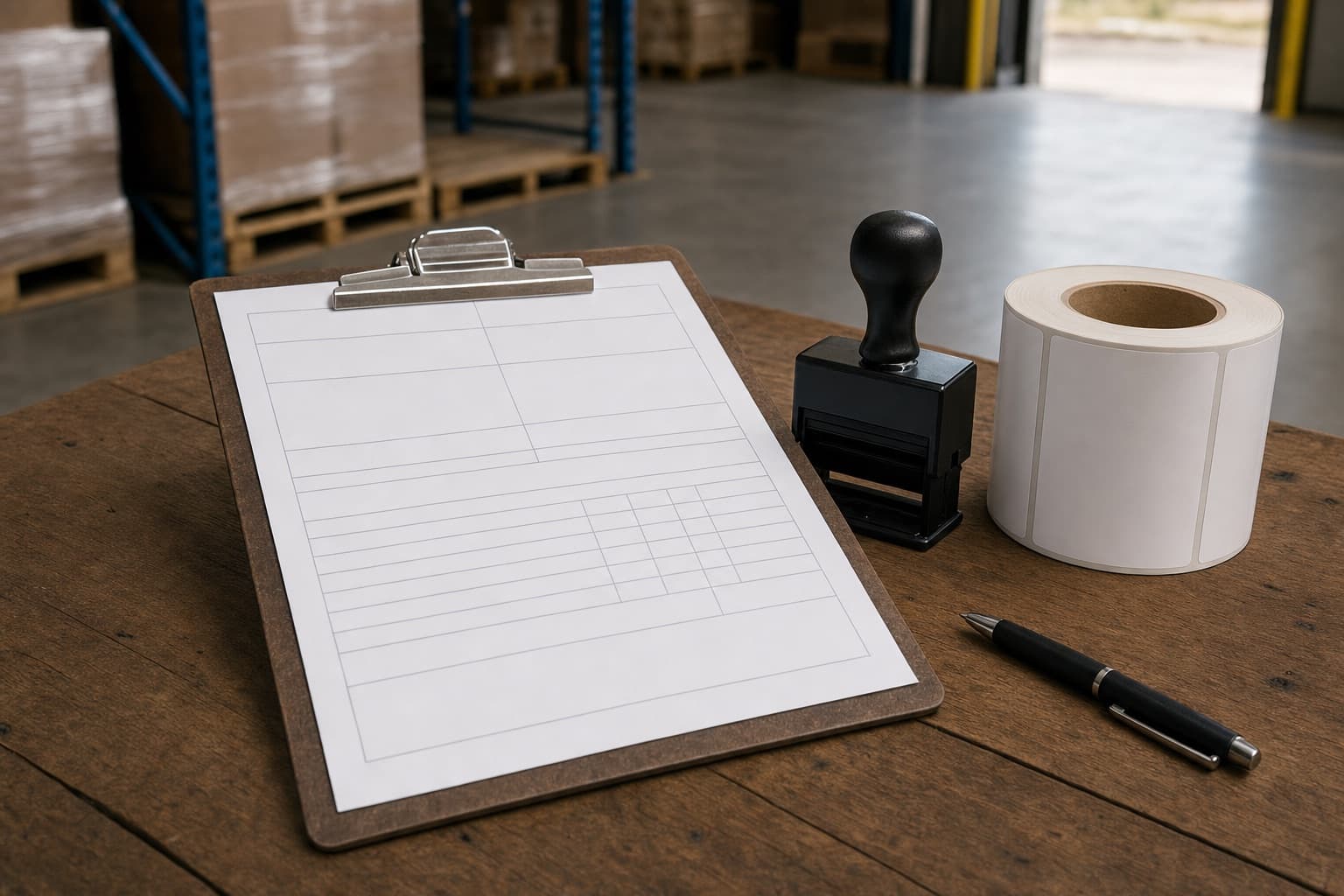
The ordering above is not the ordering on the form. Forms put the addresses at the top because that is what a driver needs first; the fields that decide what you pay sit in the middle and get filled in last, often by someone copying from a previous shipment. That mismatch between visual prominence and financial consequence is worth knowing about before you delegate the task.
The description is the field that costs money
A classification is drawn from a published tariff by commodity, and the description on the document is what points at it. “Machine parts” and a properly stated commodity with its classification are two different levels of risk, and the vague one is not cheaper, it is unpriced. A form cannot determine a class on its own, for the reason set out in the article on class calculators.
Who fills it in, and who is responsible for it
The shipper prepares it. That remains true when a broker or a platform generates the document, when an ERP prints it, and when a carrier supplies its own version. Whoever typed it, the shipper is the party warranting that the description and the count are right, and that is the position you are in when a claim or a re-rate is argued.
Signing it, at both ends
A driver signing at pickup is acknowledging a count and apparent condition, not the contents of sealed cartons. A consignee signing at delivery is doing the same in reverse, and signing clean means there was nothing to note. Noting damage or a short count at that moment, on the document, is what makes a later claim straightforward rather than contested.
Keep the copy you signed
The version that matters is the one signed at pickup, with the exceptions written on it if there were any. Photograph it before the driver leaves with their copy, because a phone picture taken at the dock has a timestamp and a copy filed later does not. A dispute months later is settled by whichever party can produce the document, and the party who can is usually the party who kept it rather than the party who was right. The same applies to the delivery copy at the far end, which is in somebody else’s hands and therefore worth asking for while the shipment is still recent. What a carrier should be asked for beyond the paperwork is in the article on judging a carrier.
More advice
- October 5, 2026Cheap LTL freight shipping: what honestly makes it cheap, and what a cheap quote is hiding
- October 2, 2026LTL freight brokers: what a broker does, what it does not, and what to check before you tender freight
- September 30, 2026Liftgate delivery: what the liftgate is, when it is required, and what happens when nobody booked it
Have the document checked before the driver arrives
Most of what goes wrong on an LTL shipment is decided by what was written on the bill of lading, before anything moved.
LTL Freight Match is an independent reference on less-than-truckload shipping for the people who buy it. It moves no freight, holds no brokerage authority and books nothing. It explains what decides a class, which accessorials turn a quote into a different invoice, and how to put competing quotes on the same footing.