Pallet freight: how it is built decides how it arrives
In a shared trailer your pallet will be lifted, set down, restacked and loaded against freight you did not choose. How it is built decides whether that matters.
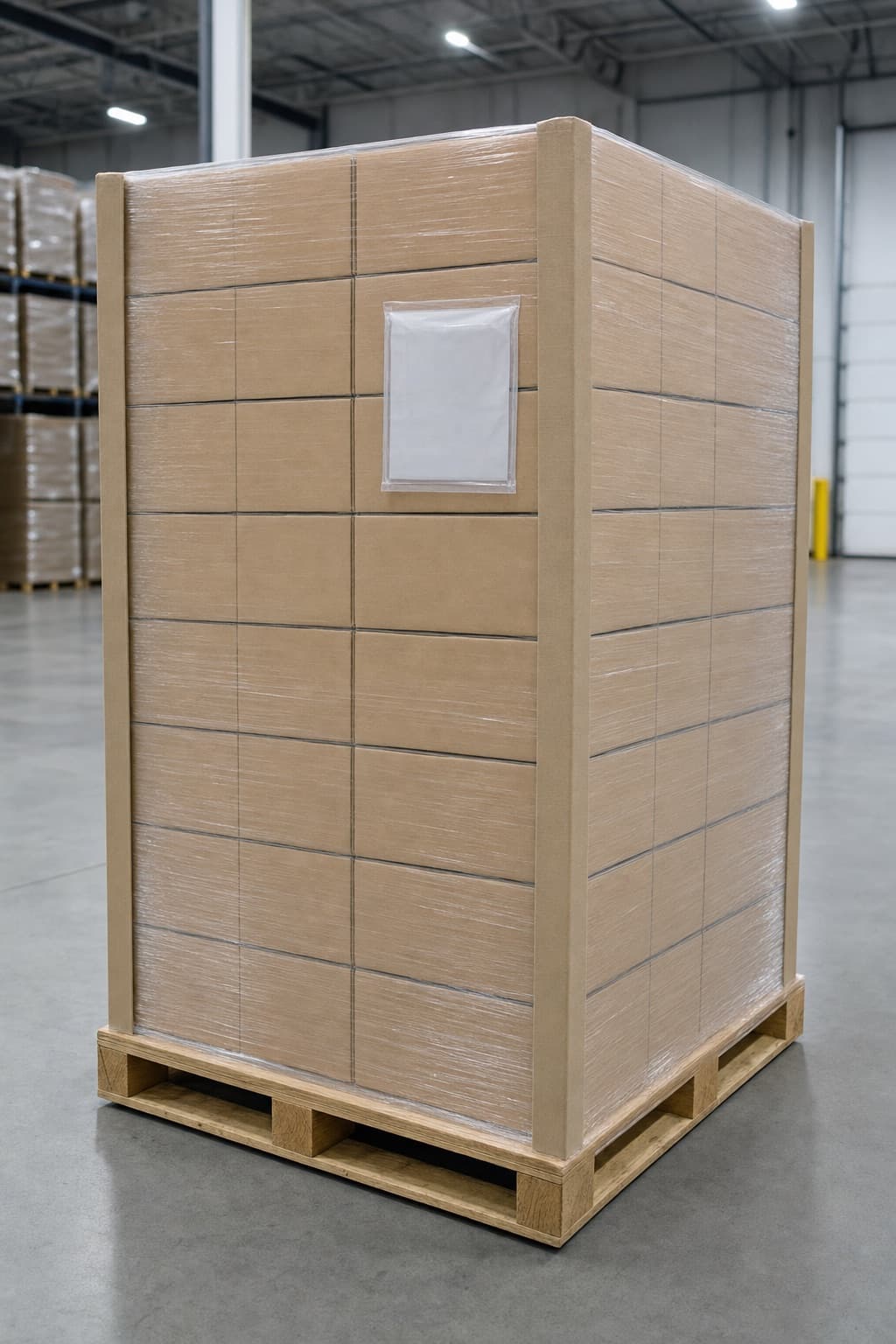
The pallet is a structural component
Shippers tend to think of the pallet as packaging. In LTL it is closer to a structural element: it is what the forks go into, what the weight of anything stacked above rests on, and what holds the load together through four or more handling events.
A broken stringer, a rotten deck board or a pallet too small for the load turns a routine handling event into a dropped load. Carriers are entitled to refuse freight on unsound pallets, and a refusal at pickup costs more time than a new pallet costs money.
Building the unit
- Start with a sound pallet sized to the load. Standard sizes move through automated equipment more predictably than custom ones.
- Keep everything inside the deck footprint. Overhang is the enemy: it is what gets clipped, and it is what changes the declared dimensions.
- Build square and stack heaviest at the bottom. A column that leans is a column that fails when something is set on it.
- Interlock or column-stack deliberately rather than accidentally. Interlocking adds stability; column stacking carries vertical load better. Pick one for a reason.
- Wrap from the deck upward, catching the pallet itself in the first turns so the load and the base become one object.
- Band or strap anything tall, heavy or unstable. Stretch wrap holds a load together; it does not hold it down.
- Protect corners on anything that can be crushed by a strap or a neighbour's freight.
Then measure it, wrapped, at its widest and tallest point. Not before.
Labelling that survives the network
A pallet separated from its paperwork becomes an overage-shortage-and-damage problem, and reuniting it with its shipment takes days rather than hours.
- Label every handling unit, not just the shipment. If four pallets travel together, all four carry a label.
- Put the label on the side, not on top. Freight gets stacked on; nothing reads a label under another pallet.
- Two labels on adjacent sides is better than one, and costs nothing.
- Label over the wrap or under it consistently, but never with the wrap covering a barcode.
- Remove old labels from reused packaging. A stale barcode is worse than no barcode.
- Mark "do not stack" only when it is true and there is a physical reason. Marked on everything, it stops being read on anything.
Stackability is a commercial decision
A stackable pallet lets the carrier use the vertical space above it. A non-stackable pallet reserves that space, and the pricing reflects it. Declaring a shipment non-stackable when it does not need to be is a real cost; declaring it stackable when the top of the load cannot bear weight is a claim waiting to be filed.
If a load cannot take weight on top, the honest answer is to build a frame that can, a simple top cap or a pallet inverted and secured above the load, rather than relying on a marking to change how a trailer gets loaded at two in the morning.
Freight that is not on a pallet
Machines, crates, coils, engines and single large items all move as LTL, but they need a defined handling unit. A carrier needs something to fork, something to measure and something to label.
Skid-mounting, crating or bolting to a base is usually the cheapest form of insurance available. It also makes the shipment measurable, which brings it back into the territory covered by freight class and dimensions.
Frequently asked questions
Can I use a plastic or a custom-size pallet?
Yes. Sound construction and a footprint that matches the load matter more than the material. Non-standard sizes simply need to be measured and declared as they are.
How high can a pallet be?
Practically, it is limited by trailer height and by whether the load stays stable. Very tall units also lose stackability, which affects pricing. Ask the provider what the carrier’s practical limit is on that lane.
Do I need to strap as well as wrap?
For anything heavy, tall or top-loaded, yes. Stretch wrap resists the load coming apart sideways; it does very little against vertical movement.
Related pages
- Bill of ladingRaise a bill of lading that will not cost money at the dock.
- Freight class calculatorKnow your density, and the class it points to, before the dock measures it.
- NMFC code lookupFind the NMFC item without paying for it or trusting a stale chart.
- Shipment descriptionStop comparing three quotes that describe three different shipments.
- Freight class and dimensionsDeclare freight correctly and avoid reclassification charges.
- LTL delivery serviceUnderstand the service model before comparing providers.
Describe the units as built
Number of pallets, wrapped dimensions, weight and whether they stack. Four answers, and the shipment can be priced properly.
LTL Freight Match is an independent reference on less-than-truckload shipping for the people who buy it. It moves no freight, holds no brokerage authority and books nothing. It explains what decides a class, which accessorials turn a quote into a different invoice, and how to put competing quotes on the same footing.