September 4, 2026 · 7 min
The shipping pallet: how it has to be built to survive an LTL network
Your freight is handled at every terminal it passes through, and nobody there knows what is in the boxes. The pallet is the only instruction they get.
A parcel is handled by machines and moves as itself. LTL freight is handled by forklifts, moves as a unit, and gets loaded, unloaded and reloaded at every terminal between origin and delivery. Nobody along that route opens the shrink wrap. Whatever the pallet communicates by its shape is the entire brief, which is why how it is built is a freight question rather than a packing one.
The pallet is a structural component, not a tray
It carries the load, it takes the forks, and it is what the stack above it is only as stable as. A pallet with a cracked stringer, a missing deck board or a previous life it did not survive will fail somewhere in the middle of the journey, and the damage will look like a handling problem when it was a base problem. Inspect the pallet before building on it, not after.
Nothing may overhang, and this is not a preference
Cartons stacked past the pallet edge lose their support exactly where they need it most, and the overhanging corner is the first thing another pallet, a forklift mast or a trailer wall meets. Overhang is also a dimension problem: the shipment is measured at its widest point, including anything hanging over, which changes the cubic figure the rate is built from, and it is why pallet sizes cost more than the wood. The dimension side of this is on the class and dimensions page.
Column stack against interlocked stack
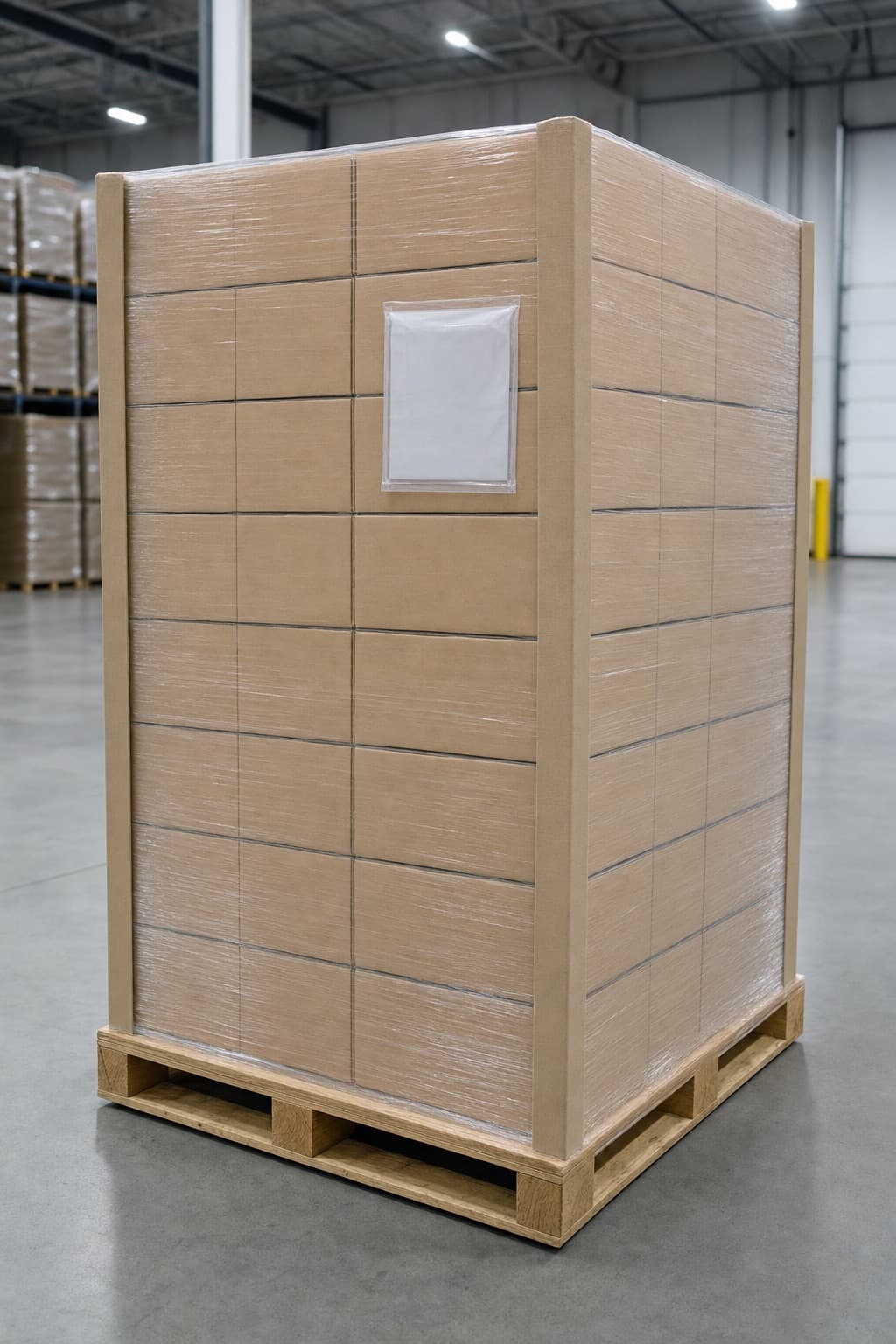
Cartons carry their weight in their vertical corners. Stacking corner over corner, in columns, keeps that strength in line and is much stronger vertically. Interlocking the layers like brickwork ties the stack together laterally but puts the corner of each carton over the face of another, which costs a large share of the compression strength. Column stack where the cartons are uniform and the wrap can do the tying. Interlock only where the load is mixed and would otherwise have nothing holding it together.
Wrap ties the load down, it does not hold the load up
Shrink wrap is a restraint, not a structure. It should start below the top deck boards of the pallet so that the load and the pallet become one object, then go up in overlapping turns with real tension. A few loose turns around the middle of the stack is decoration. Corner boards down the four vertical edges are what let the wrap actually pull the stack in rather than simply squeezing the top layer, and on anything tall they matter more than extra film.
Height, weight distribution and what stacks on top
Heavy at the bottom, light at the top, weight spread across the deck rather than concentrated over one corner. A flat top means another shipment can be loaded above yours, which is how a trailer fills and part of how the network stays economic. A pyramid or a protruding item on top makes the pallet unstackable, and an unstackable pallet takes floor space that has to be paid for by somebody, which is one of the things that decide a pallet’s cost. If the load genuinely cannot be topped, say so at quoting time rather than letting the terminal discover it.
Labels, and the copy that survives
Labels go on two adjacent sides at least, on the cartons rather than only on the wrap, because wrap gets cut. The bill of lading is what the shipment travels on and the document every terminal reads: what is on it is what the network believes, and filling it in properly is one stage of the shipper’s side of one shipment. Old labels from a previous journey should be removed entirely rather than crossed out.
Why this is a rate question, not just a damage question
A badly built pallet gets remeasured, reclassified or refused, and each of those becomes a correction on an invoice weeks later. A well built one is measured once and moves. That is the same mechanism described in the article on re-rated invoices, and getting it right at the dock is a great deal cheaper than arguing about it afterwards. What we ask for is on the pallet freight page.
Tell us how it is built
Dimensions with the pallet included, and whether anything overhangs. Those two answers change a quote more than most people expect.
LTL Freight Match is a licensed freight broker. It quotes, books and manages less-than-truckload shipments, arranges the carrier, and handles the classification, the accessorials and the claim if one is needed.