October 16, 2026 · 8 min
The life of a bill of lading across an LTL move, signature by signature
The document is signed at least twice and read at every transfer. Each of those moments is a place where a shipment gets recorded correctly or does not.
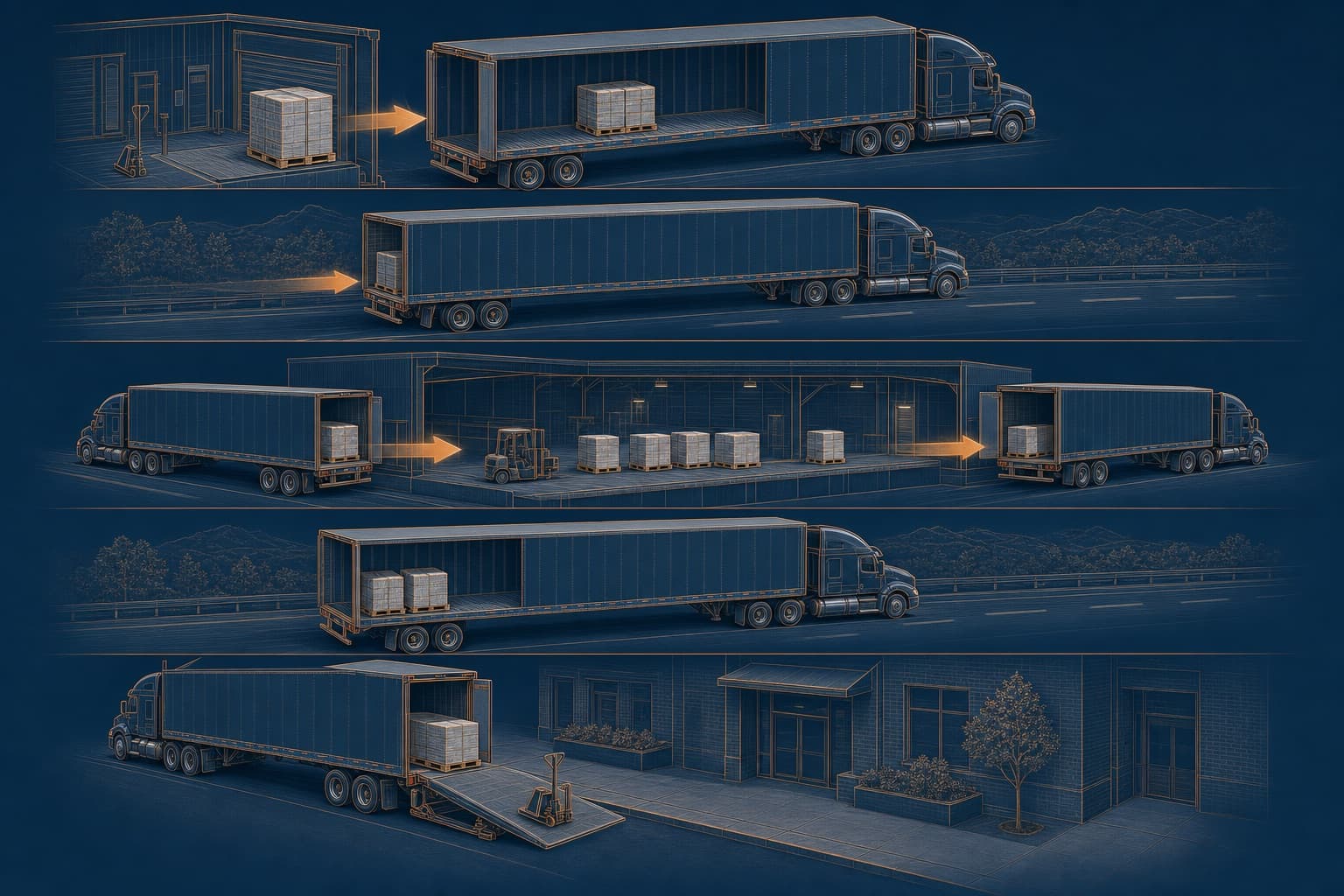
An LTL shipment is handled by several parties in sequence, and the bill of lading is the thread running through all of them. Following it through the journey explains why certain things have to be right at the start and why others can only be fixed at the end.
Before pickup: the document defines the shipment
Until the driver arrives, the bill of lading is a description of something that has not moved. Everything about the price is decided here, from the count and the weight to the accessorials, and this is the only moment when changing it costs nothing. Every correction after this point has a process attached to it and most have a charge. If there is a single habit worth building around LTL, it is reading the document once, out loud, against the freight standing on the floor, before anyone is waiting for it. What an LTL journey is made of is set out in the article on what LTL is.
At pickup: a receipt is created
The driver checks the count and the apparent condition of the outside of the freight, signs, and leaves you a copy. That signature covers what can be seen. It does not acknowledge the contents of sealed cartons, and no LTL driver is going to open them.
At the origin terminal: the shipment gets measured
This is where a dimensioning frame and a scale meet what the document claims, and where a difference becomes a re-rate. Nothing about this step is adversarial; it is automated and it happens to every shipment. The mechanism is in the article on re-rating.
At each transfer: the document is read, not re-negotiated
Freight in an LTL network is handled at one or more cross-docks between linehauls. At each one, the paperwork and the labels are what tell a handler where the freight goes next. Anything ambiguous on the document becomes a decision made by somebody who has never seen your shipment before, working against a trailer cut-off.
This is the argument for labelling every handling unit as well as completing the document. Paperwork and freight travel together in principle and separate in practice, and a pallet whose own label says where it is going survives that separation. It is also why the piece count on the document has to match what a handler can physically count on the floor.
At delivery: the second signature, and the one that matters most
The consignee signs to acknowledge receipt. Signing clean says there was nothing to note. If there is visible damage, a short count, or packaging that has clearly been opened, it goes on the document at that moment, in writing, before signing. A clean signature followed by a damage report the next day is the hardest position to argue from.
Brief whoever will actually be there
The person receiving the freight is often not the person who bought the transport, and they have a driver waiting. Telling them in advance to count handling units, walk around the load, and write anything unusual on the paperwork is the highest-value two-minute conversation available on an LTL shipment. It helps to be specific about what counts as unusual: torn wrap, a crushed corner, a pallet that is no longer square, a carton that has obviously been opened, or simply fewer handling units than the document says.
After delivery: the document becomes evidence
The signed copies, with any exceptions on them, are what a claim is built from and what an invoice dispute is settled against. They are also what proves the terms that applied. Keep them with the PRO number and the delivery date, and keep them longer than feels necessary: claim filing windows and the periods carriers hold their own records are both finite, and the point at which you need the document is usually the point at which everybody else has moved on from it.
The delivery signature is the one to brief someone about
Whoever receives the freight decides, in one signature, how easy a claim will be. Tell them what to look at.
LTL Freight Match is an independent reference on less-than-truckload shipping for the people who buy it. It moves no freight, holds no brokerage authority and books nothing. It explains what decides a class, which accessorials turn a quote into a different invoice, and how to put competing quotes on the same footing.