October 28, 2026 · 6 min
Why freight class exists in LTL, and not in a full truckload
A full trailer is priced by the trailer. A shared one has to price each shipment against the others, and class is how it does that.
Shippers who move between full truckload and less than truckload often ask why class suddenly matters. In a full truckload, nobody asks what class the freight is. In LTL, it is on every bill of lading and behind most disputes. The reason is not bureaucracy. It is the economics of sharing a trailer.
A full trailer is priced as a trailer
In a full truckload, one shipper buys the use of a whole trailer from one point to another. The carrier’s cost is the truck, the driver and the distance, and the rate reflects those, with weight mattering only up to the legal limit. Whether the trailer holds dense steel or light foam, the carrier is moving one load for one customer.
That is also why full truckload quotes ask different questions: the equipment type, the pickup and delivery windows, whether the load can be stacked to the roof. The answers decide the rate. The commodity’s class does not come into it.
A shared trailer has to divide its cost
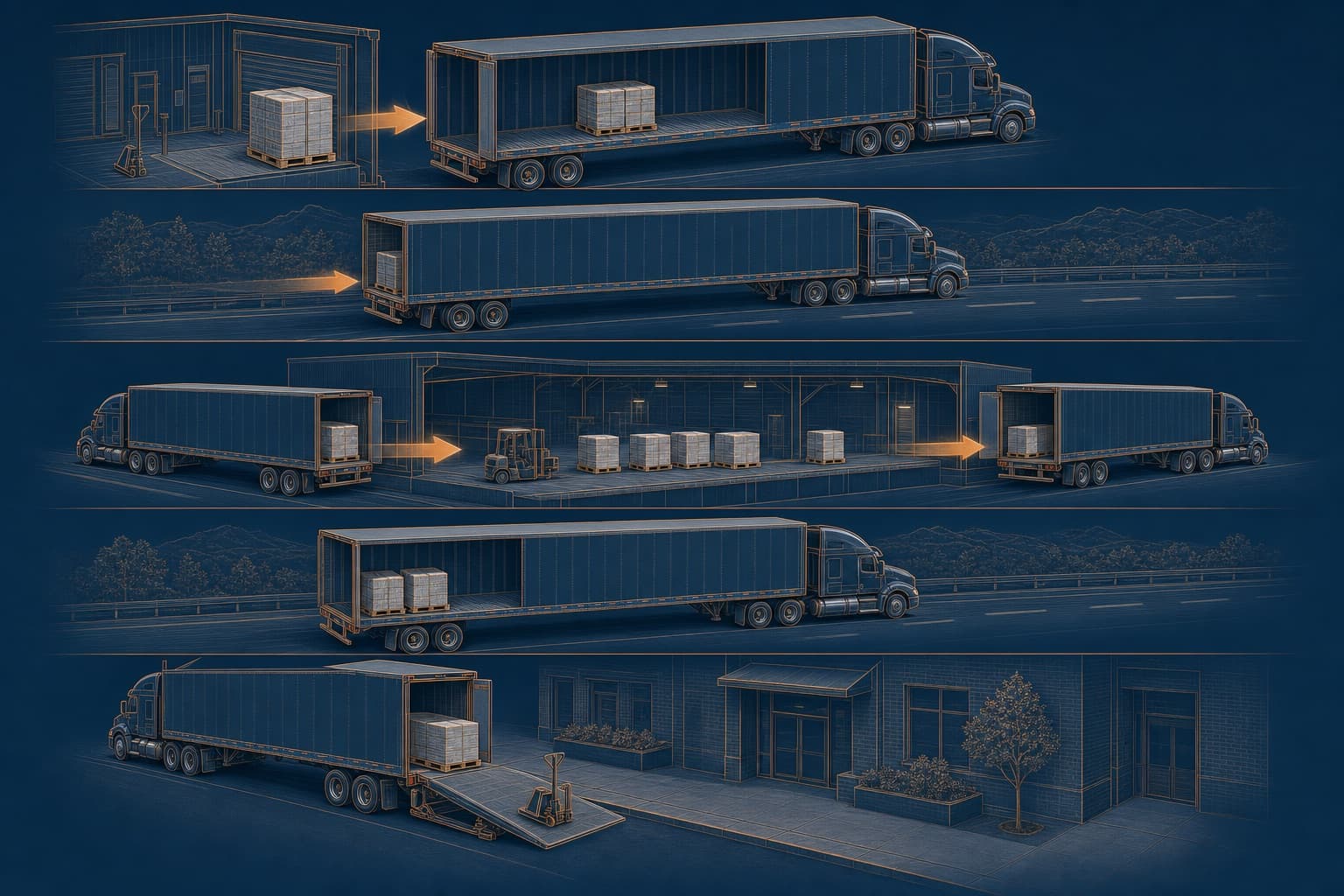
In LTL, a trailer carries many shipments from many shippers, and the carrier has to decide what share of the trailer’s cost each one should bear. Weight alone would be unfair: a light, bulky shipment takes up space that could have carried something else. Class is the system that adjusts the price for how much of the trailer, and how much handling, a shipment really consumes.
The network adds handling
LTL freight does not travel directly. It is picked up, taken to a terminal, cross docked onto a line haul trailer, possibly transferred again, and delivered by another driver. Each transfer is a chance for damage and a cost in labour. That is why handling and liability sit beside density in the classification, and why fragile or awkward freight sits higher. The journey itself is described in the article on what LTL is.
Where the line between the two modes falls
There is no single cut off, but as a shipment grows to fill a large part of a trailer, class stops being the main driver of price and the question becomes whether a partial or full truckload would be cheaper and safer. That comparison is in the article on partial and full loads.
Volume quotes, the exception inside LTL
Large LTL shipments, often several pallets over a certain footprint, are frequently quoted on a volume or spot basis that looks more like truckload pricing, with class playing a smaller role. That is a different product with its own rules, and it should be asked for by name rather than assumed.
The same is true at the other end of the scale. A single small carton is often better sent as a parcel than as LTL freight, where minimum charges apply whatever the class. Class is a tool for pricing shared trailer space, and it is only the right tool for freight that actually needs a shared trailer.
What this means for a shipper
If you ship LTL, class is part of your product data, as much as weight or dimensions, and it deserves to be right on every bill of lading. If you mostly ship full loads and occasionally send a pallet, the occasional pallet is exactly where an unfamiliar class causes a re-rated invoice.
How we approach it
We start from what the freight is and how it is packed, establish the class from the classification rather than from habit, and check whether the shipment is better suited to LTL or to a partial load before we quote. The pages on class and dimensions set out what we ask for and why.
Know which mode you are actually buying
Class matters in LTL and hardly at all in a full truckload. Tell us what you ship and we will say which side of that line it falls on.
LTL Freight Match is an independent reference on less-than-truckload shipping for the people who buy it. It moves no freight, holds no brokerage authority and books nothing. It explains what decides a class, which accessorials turn a quote into a different invoice, and how to put competing quotes on the same footing.