September 11, 2026 · 7 min
How the LTL freight industry is organized, and why it behaves the way it does
Fourteen thousand eight hundred searches a month for the industry itself. Once you can see how it is put together, most of what shippers find strange about it stops being strange.
Full truckload is a simple industry: a tractor, a trailer, a driver, and anyone with those three can enter it. LTL is the opposite. It runs on networks of terminals that take years and serious capital to build, and nearly everything that puzzles shippers about LTL, the pricing, the surcharges, the consolidation, follows from that one structural fact.
An industry built on terminals
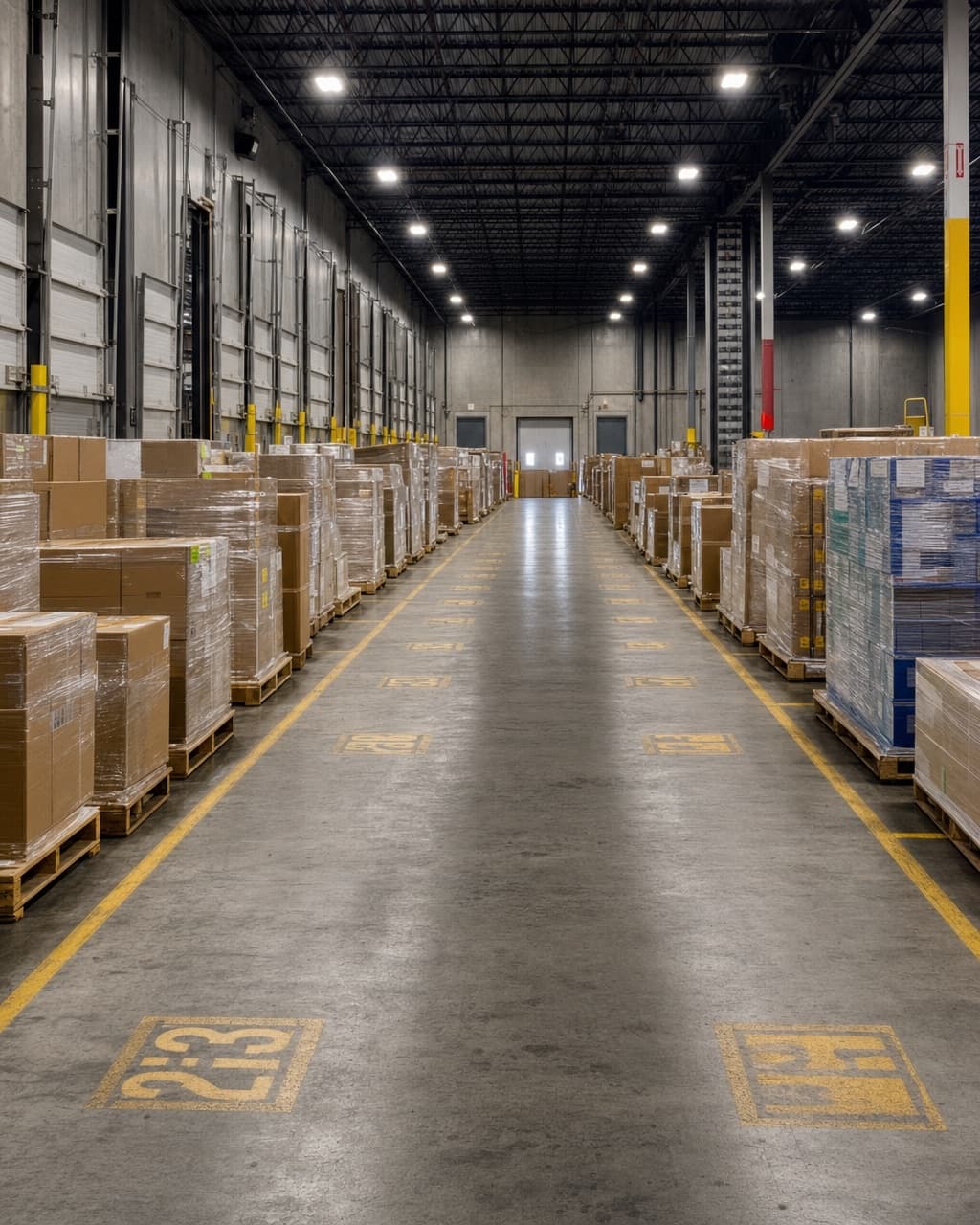
An LTL carrier is not a fleet of trucks, it is a network of buildings. Local vehicles collect freight and bring it to a terminal; linehaul trailers move it between terminals; local vehicles deliver it at the far end. The mechanics of that journey are in what LTL actually is. The industry consequence is that capacity cannot be added quickly. A truckload carrier can grow by buying trucks. An LTL carrier grows by acquiring land, doors and sorting capacity, which is slow and expensive, and it is why the number of genuinely national LTL networks is small.
Hub and spoke, and what it optimizes
The network is built to keep linehaul trailers full. Freight from many shippers is consolidated at an origin terminal, moved in bulk toward the destination region, and broken back down for delivery. Every efficiency in LTL comes from that consolidation, and so does every irritation: the handlings, the transit estimates rather than commitments, and the pricing machine described in the rates article. The network is not organized around any single shipment. It is organized around the trailer, which is also why a tracking feed goes quiet for days at a time.
National, regional, and everyone in between
A handful of carriers operate coast to coast. Below them sit strong regional carriers, dense and fast inside their territory and absent outside it, and below those, specialists by freight type or geography. None of these tiers is better than the others. A regional carrier inside its own footprint is frequently faster and cheaper than a national on the same lane, because its network is denser exactly there.
Interlining, the seam in the map
Where a carrier’s network ends and the freight has not arrived, the shipment is handed to a partner carrier. That handoff is called interlining, and it adds a handling, time, and a second company to any claim conversation. Nothing on a quote says loudly whether a lane is direct or interlined, and it is one of the most useful questions a shipper can ask when judging a carrier against your lane.
Why the industry consolidates
Terminal networks reward scale: a fuller trailer costs the same to drive, and a denser delivery route costs less per stop. So larger networks tend to absorb smaller ones, and when a network fails its capacity does not reappear elsewhere the next week, because the buildings and the sorting operations are the capacity. This is why LTL pricing tightens and loosens with the industry itself and not just with fuel.
Published tariffs and general rate increases
Carriers price from published base tariffs and adjust them through general rate increases, which change the base that every discount is applied against. A shipper who hears about a rate increase is not being singled out; the denominator moved for everybody. What that means for reading a quote is on the shipping cost page.
What all this means for a shipper
That the right carrier is a property of the lane, not of the carrier. Strength in this industry is geographic, and the question is never which carrier is best but which network is dense where your freight actually goes. It also means the answer changes: networks open terminals, close them, absorb each other, and reprice lanes as their balance shifts, so the right choice for a lane this quarter is worth rechecking next quarter. Answering that per shipment is most of what we do, and it is why we quote against several networks rather than defending one, which is most of what a broker adds to a carrier.
Put the network to work on your freight
Which carrier is strong on your lane is an industry question. Answering it is the job.
LTL Freight Match is a licensed freight broker. It quotes, books and manages less-than-truckload shipments, arranges the carrier, and handles the classification, the accessorials and the claim if one is needed.